III
Oracle Digital Assistant · Enterprise AI · 2023
Conversations toKnowledge
Transforming enterprise knowledge into conversational AI.
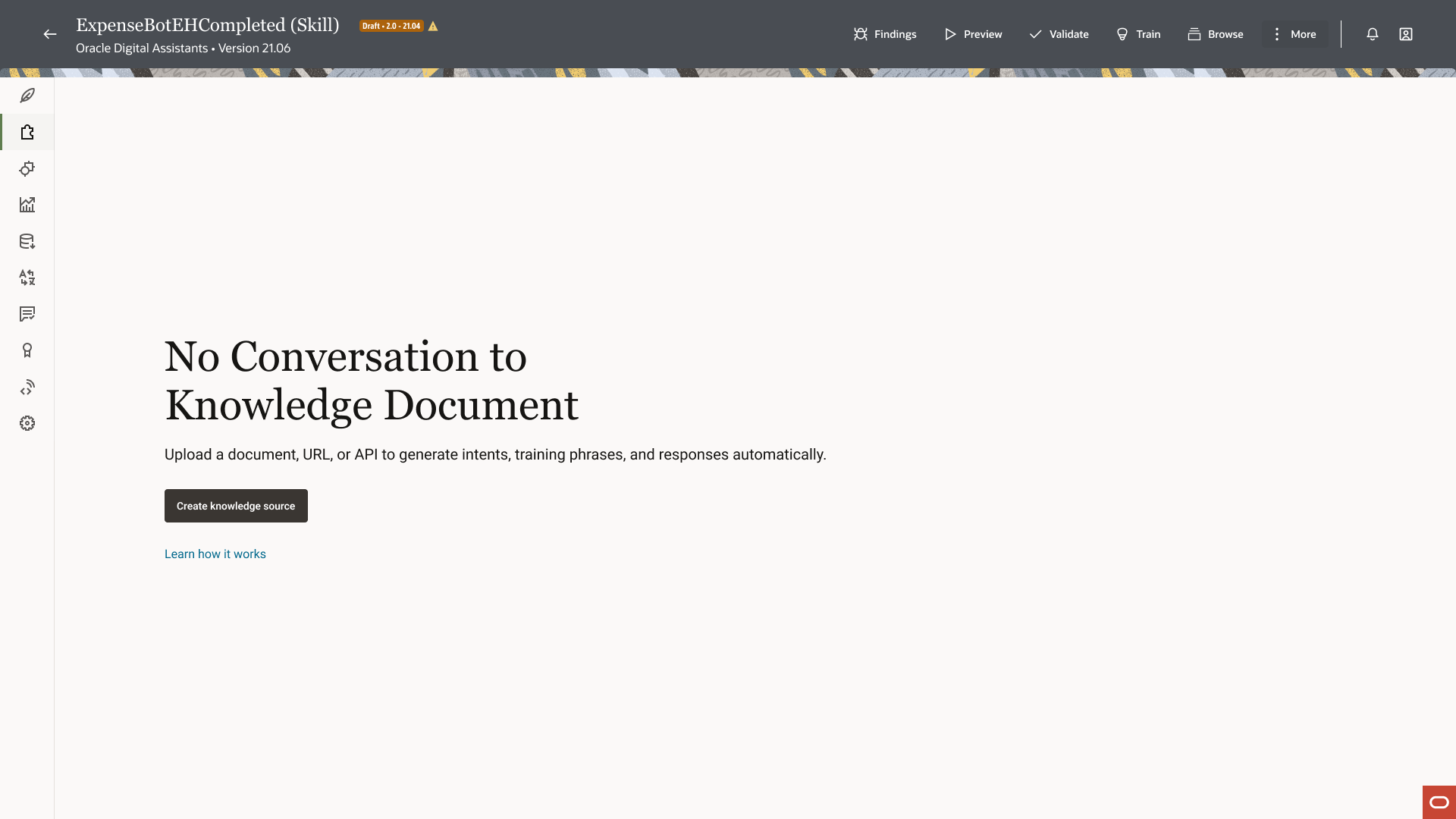
II — The Transformation
Existing knowledge became reviewable conversation.
Teams already had the knowledge. The challenge was transforming it into a reviewable conversational foundation instead of rebuilding it manually.
01
Knowledge sources
- URL
- CSV
02
AI Generation
- Candidate intents
- Training phrases
- Suggested answers
03
Human Review
- Inspect
- Refine
- Validate
04
Deployment
- Publish
III — The Problem
Enterprise knowledge wasn't the problem.Authoring conversations was.
Organizations already had product documentation, FAQs, support content, and other knowledge sources.
Turning that knowledge into a traditional enterprise chatbot, however, meant rebuilding it conversation by conversation. Every answer required manually defining intents, writing training phrases, preparing responses, and validating the result before deployment.
Knowledge sources
Manual authoring
Repeated intent modules
Intent 01
Training phrases
Response
Validation
Intent 02
Training phrases
Response
Validation
Intent 03
Training phrases
Response
Validation
Intent 04
Training phrases
Response
Validation
Intent 05
Training phrases
Response
Validation
Intent 06
Training phrases
Response
Validation
Intent 07
Training phrases
Response
Validation
Intent 08
Training phrases
Response
Validation
Intent 09
Training phrases
Response
Validation
Intent 10
Training phrases
Response
Validation
Intent 11
Training phrases
Response
Validation
Intent 12
Training phrases
Response
Validation
Intent 13
Training phrases
Response
Validation
Intent 14
Training phrases
Response
Validation
Intent 15
Training phrases
Response
Validation
Intent 16
Training phrases
Response
Validation
Intent 17
Training phrases
Response
Validation
Intent 18
Training phrases
Response
Validation
Intent 19
Training phrases
Response
Validation
Intent 20
Training phrases
Response
Validation
Intent 21
Training phrases
Response
Validation
Intent 22
Training phrases
Response
Validation
Intent 23
Training phrases
Response
Validation
Intent 24
Training phrases
Response
Validation
Intent 25
Training phrases
Response
Validation
Intent 26
Training phrases
Response
Validation
Intent 27
Training phrases
Response
Validation
Intent 28
Training phrases
Response
Validation
Intent 29
Training phrases
Response
Validation
Intent 30
Training phrases
Response
Validation
Intent 31
Training phrases
Response
Validation
Intent 32
Training phrases
Response
Validation
C2K didn't replace intent-based chatbots.It replaced the manual authoring required to build them.
Rather than asking designers to manually create every intent, training phrase, and response, C2K generated a reviewable conversational foundation directly from existing knowledge sources.
The role of the designer shifted from authoring everything to reviewing, refining, and validating generated outputs.
IV
Designing within reality
The following decisions shaped the experience by making AI behavior understandable within the product constraints already in place.
01
Make AI visible while it works.
Trust begins before the first result appears.
The project was designed during an early stage of AI-assisted enterprise authoring workflows. While machine-learning chatbots already existed, generating conversational foundations directly from enterprise knowledge was still unfamiliar to many teams.
Users weren't simply waiting for results. They were deciding whether they trusted the system.
A traditional loading indicator could confirm that the system was busy. It could not explain what the AI was actually doing.
That distinction became the design problem.
Instead of hiding the process behind a progress bar, the experience surfaced meaningful stages of generation.
- What C2K was doing
- Which stage had been completed
- Why the process required time
The waiting experience became an opportunity to build confidence instead of dead time.
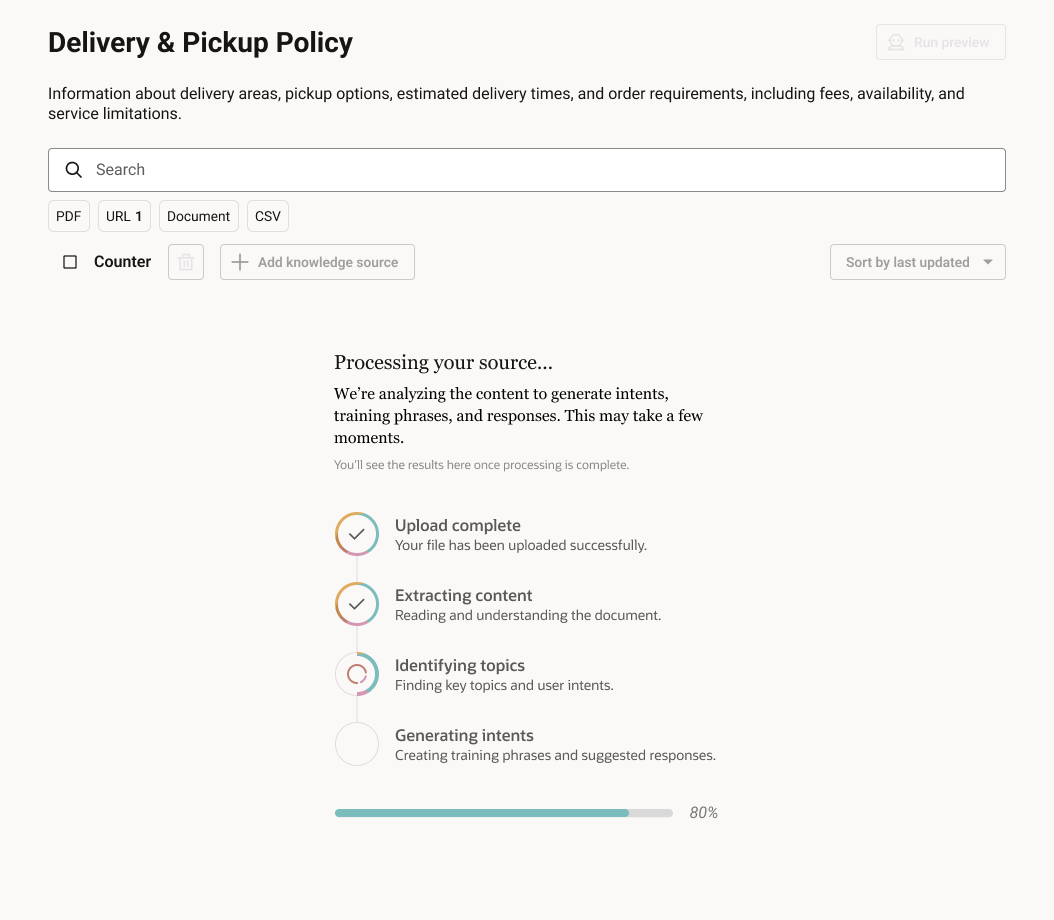
Progress as explanation
The interface makes the process visible before any final conversational content exists.
Waiting as evaluation
Users can see that the system is analyzing, structuring, and preparing output for review.
Trust begins before thefirst result appears.
02
Design for review, not automation.
C2K could generate hundreds of candidate intents from an existing knowledge source.
Presenting those outputs as finished would have created the wrong expectation. Generated content needed to remain inspectable and editable.
The experience treated AI output as material for review rather than a final answer.
Confidence levels helped teams identify where closer attention was needed, while actions such as editing utterances and testing confidence kept human judgment inside the workflow.
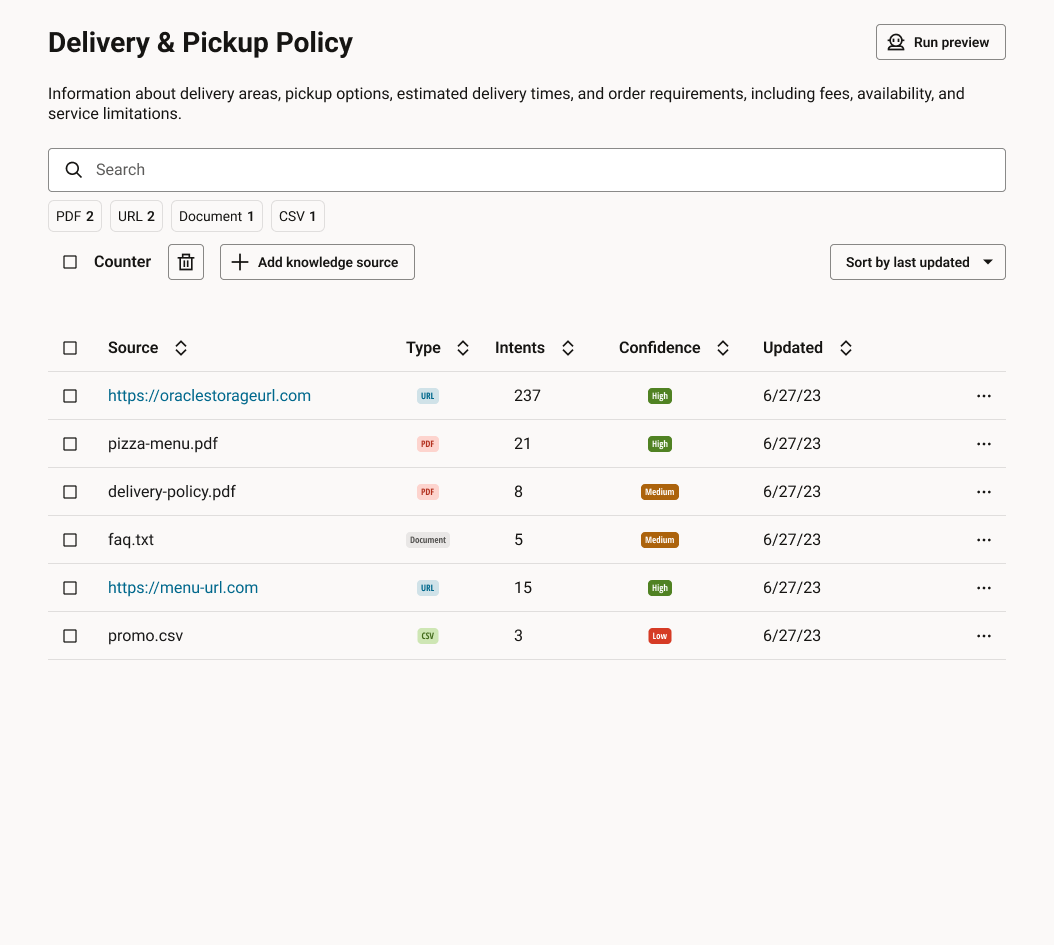
Confidence made uncertainty visible.
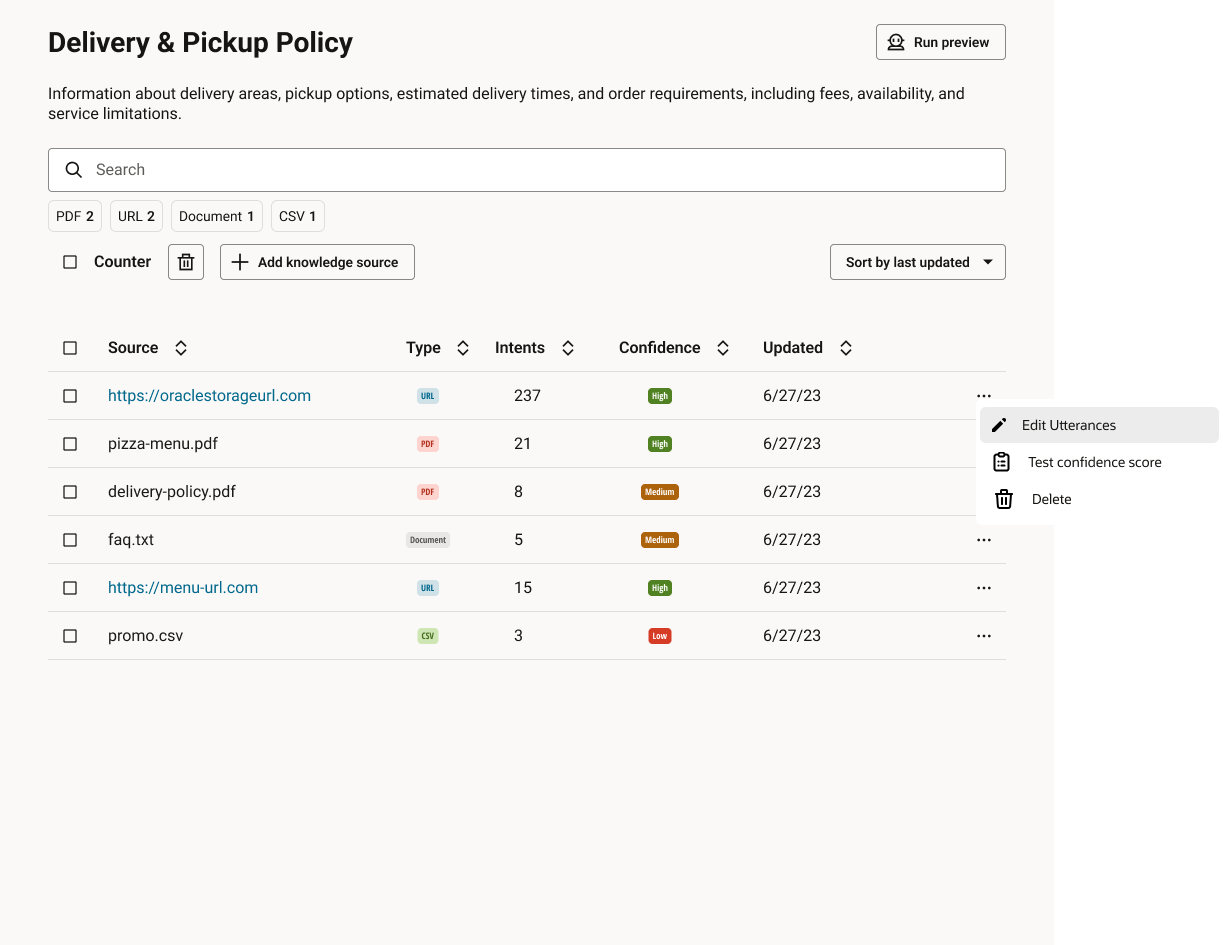
Review remained part of the workflow.
The role of the designer shifted from authoring every conversational element from scratch to reviewing, refining, and validating a generated foundation.
AI proposed.People decided.
03
Extend familiar workflows.
Before C2K, teams already knew how to create, review and maintain conversational intents.
Introducing AI was already a significant behavioral change. Changing the entire interface at the same time would have forced users to learn two things simultaneously: a new capability and a new product.
Instead of replacing the authoring experience, C2K extended the existing workflow.
Generated conversations entered the same review environment users already understood. The interface intentionally evolved less than the workflow itself.
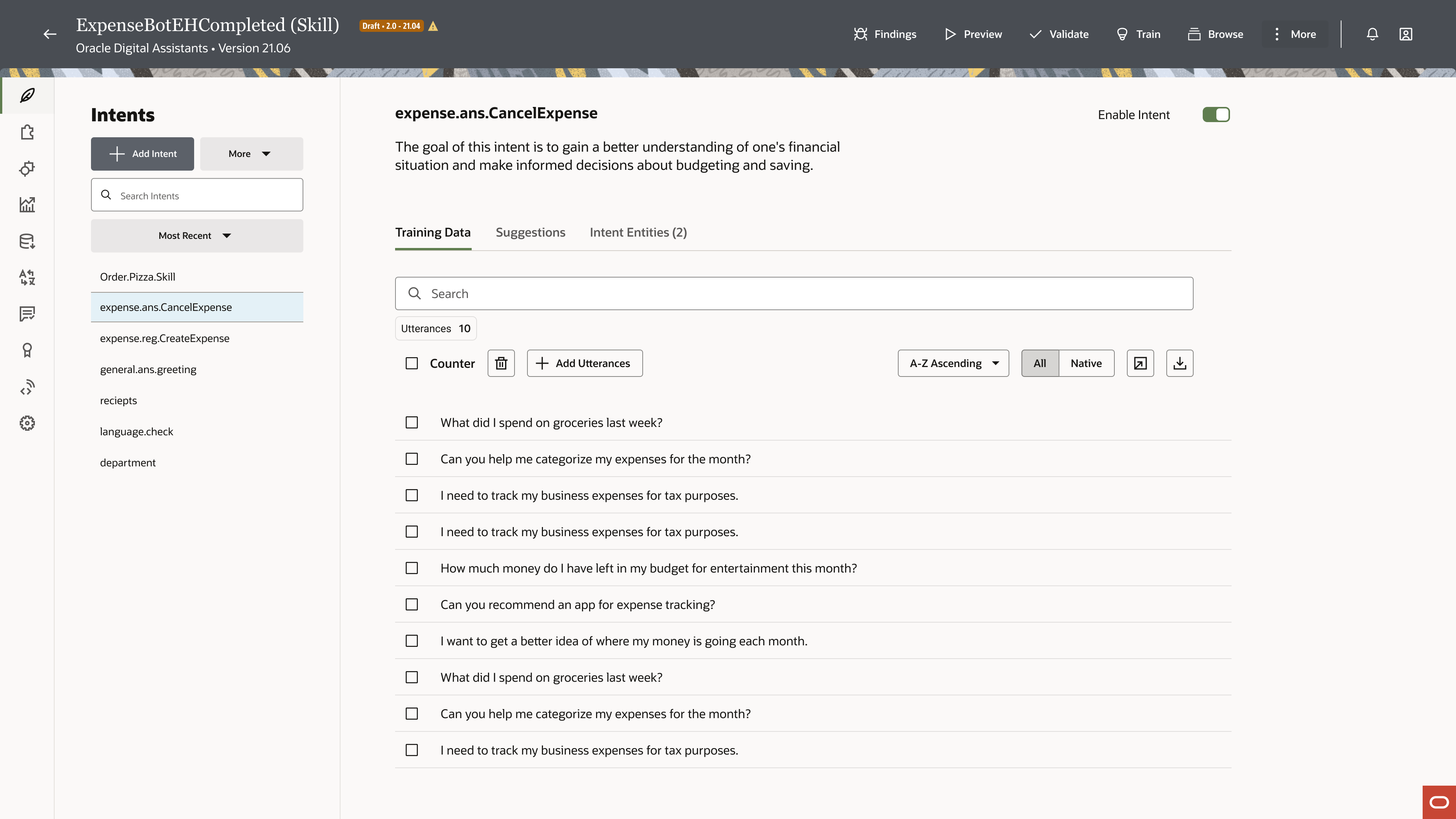
Existing review workflow
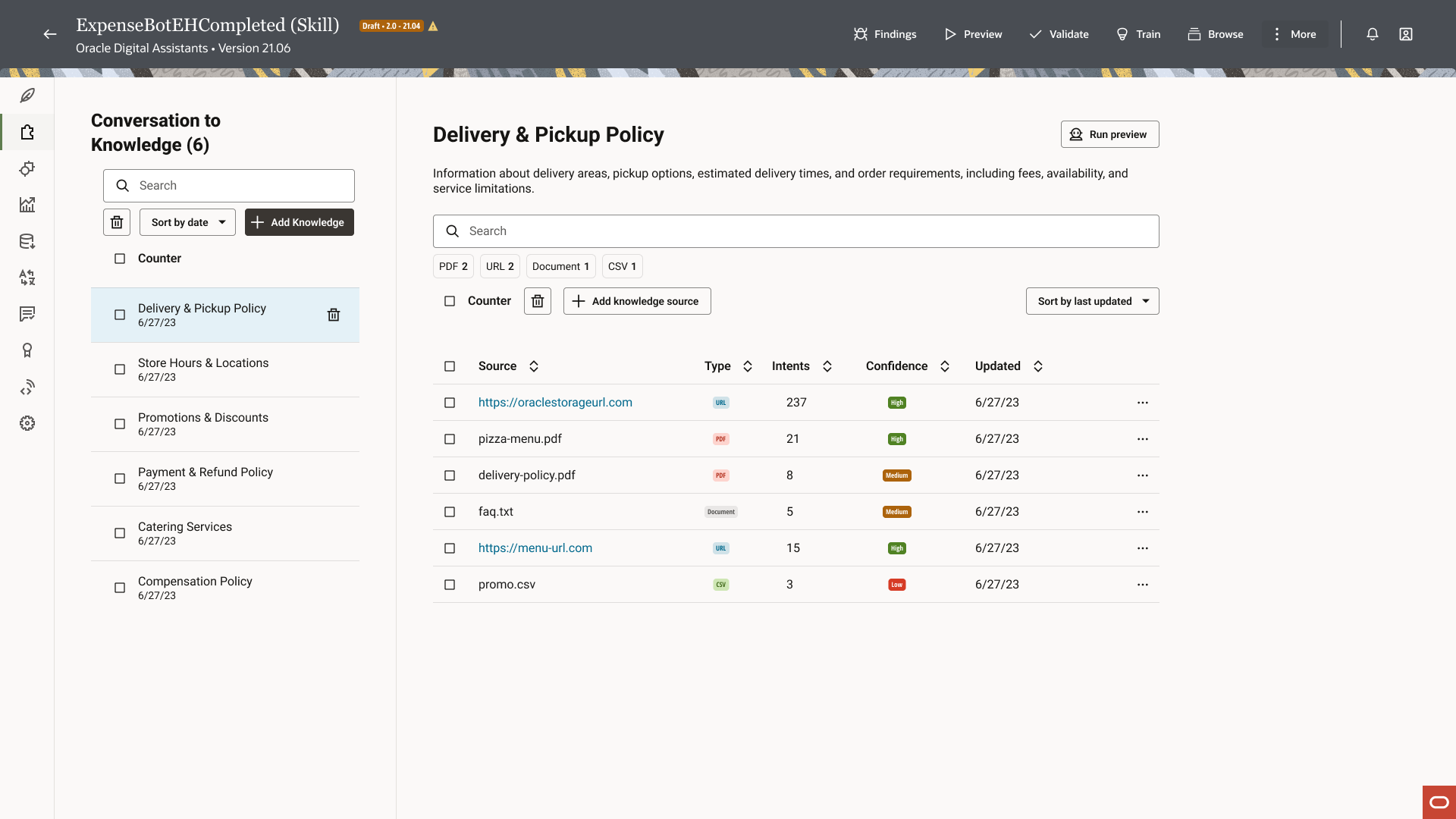
Extended, not replaced
Users learned a new capability instead of learning a new interface.
Innovation happened insidea familiar workflow.
04
Knowledge deserved its own workspace.
Before C2K, documents functioned primarily as inputs for creating conversational content.
Once intents were authored, the relationship with the original knowledge source became difficult to manage.
Documentation continued to evolve, but there was no dedicated place to organize sources, maintain them, or regenerate conversational content as that knowledge changed.
Rather than hiding documents behind an import flow, C2K introduced a dedicated workspace for managing knowledge sources.
Knowledge finally had a place to live.
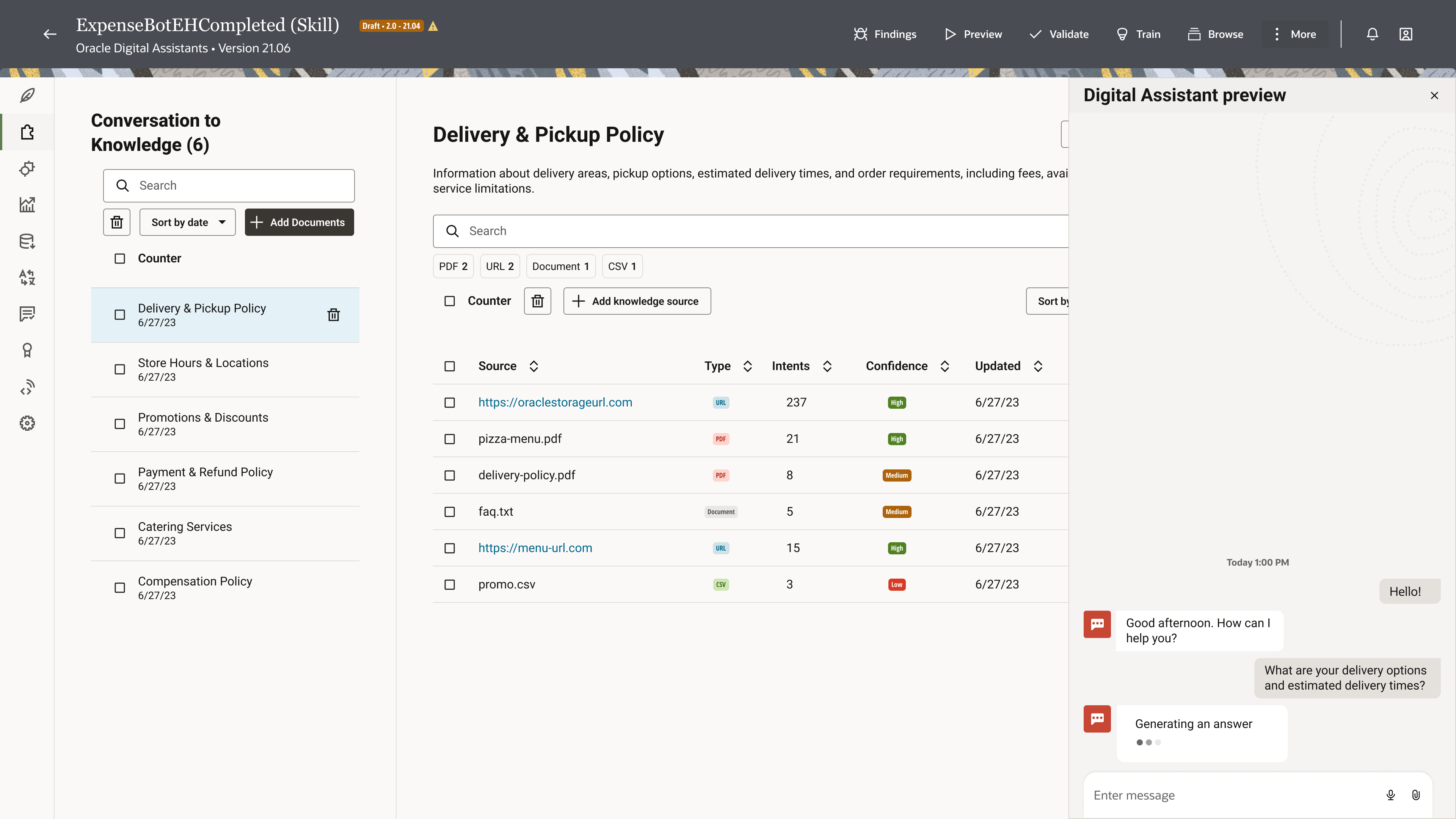
Dedicated workspace for managing knowledge sources.
Knowledge could now be organized, reviewed, updated, and regenerated independently from the conversations it produced.
Knowledge became a reusable product asset rather than a one-time setup step. Teams could maintain conversational experiences by evolving their source knowledge instead of rebuilding everything manually.
Knowledge became a product surface,not an implementation detail.
V — What changed
The work shifted.
Three shifts defined how teams built enterprise chatbots after C2K.
01
Review replaced manual authoring.
Teams started reviewing AI-generated conversational foundations instead of creating every intent, training phrase, and response from scratch.
02
Knowledge became reusable.
Documentation could evolve without forcing teams to rebuild conversational experiences. Knowledge became a reusable product asset instead of a one-time import.
03
Confidence became visible.
Generated content stopped feeling like a black box. Confidence indicators and preview tools made AI outputs easier to inspect, validate, and refine before deployment.
The product changed how conversations were built—not by replacing people, but by changing where their effort was spent.
VI — Reflection
Designing C2K changed how I think about AI products.
At first, the challenge appeared to be generating conversations from existing knowledge.
Over time, I realized the real design challenge wasn't generation—it was trust.
People don't adopt AI because it produces answers. They adopt it when they understand what the system is doing, can inspect and question its outputs, and remain in control of the final decision.
Looking back, the most valuable part of C2K wasn't automating conversational design. It was redesigning the relationship between people and AI.
That principle continues to shape how I approach AI products today.
The future of AI products isn't replacing human expertise.It's giving people better places to apply it.